Expert Mold Remediation for Rocky Valley Warehouses: Tackling Industrial-Scale Challenges
Warehouses in Rocky Valley face unique mold risks due to high humidity, poor airflow, and hidden moisture in concrete or stored goods. We specialize in industrial-scale mold remediation that restores safety and compliance without disrupting operations.
Why Warehouses in Rocky Valley Are Mold Hotspots
Our region’s seasonal humidity spikes—especially in spring and fall—create ideal conditions for mold growth on pallets, drywall, and even concrete slabs.
Poor ventilation in large, sealed spaces traps moisture from condensation, leaks, or even breathing, accelerating spore spread.
Stored materials like cardboard, wood, or fabric absorb ambient moisture, fueling hidden infestations behind racks or under flooring.
Common Warehouse Mold Types and Their Risks
Aspergillus and Cladosporium thrive on organic dust and damp surfaces, often found on ceiling tiles or insulation in older facilities.
Stachybotrys (black mold) appears in chronically wet areas, like near leaking roofs or plumbing, posing serious health risks to workers.
Penicillium spreads quickly on water-damaged materials, releasing spores that can contaminate inventory and HVAC systems.
| Mold Type | Common Locations | Health Risk Level |
|---|---|---|
| Aspergillus | Dusty racks, insulation, HVAC ducts | Moderate |
| Cladosporium | Wood pallets, concrete walls | Low-Moderate |
| Stachybotrys | Water-damaged drywall, ceilings | High |
| Penicillium | Cardboard, fabric, wet flooring | Moderate-High |
Industrial Mold Remediation: Our Process for Rocky Valley Facilities
We start with a thorough mold inspection and air quality testing to map spore concentrations and identify moisture sources.
Containment barriers and negative air pressure systems prevent cross-contamination during removal in active warehouses.
HEPA filtration and commercial-grade antimicrobial treatments ensure spores are captured, not just dispersed.
Every warehouse has unique airflow, materials, and usage patterns. Our remediation plans are tailored to your facility’s specific layout and operations.
Hidden Moisture: The Root Cause in Warehouse Settings
Concrete slabs without vapor barriers wick groundwater, creating persistent dampness that feeds mold at the foundation level.
Condensation from temperature swings—common in uninsulated metal buildings—drips onto stored goods, fostering growth.
Leaky roofs or plumbing in older facilities (like those in Coopersburg or Hellertown) often go unnoticed until mold becomes visible.
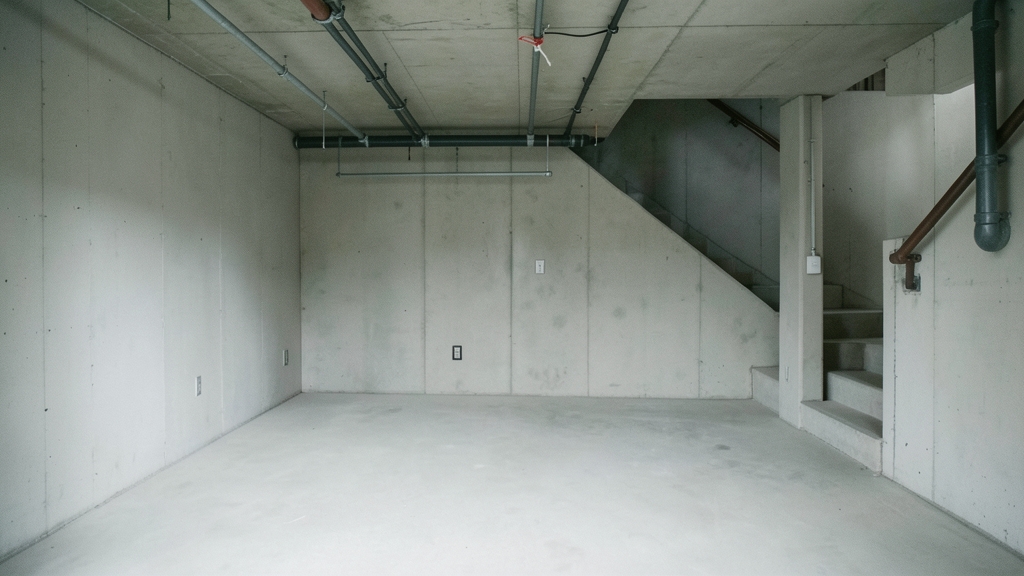
Mold in below-grade areas can spread upward via HVAC systems or inventory movement. We always inspect these zones during warehouse assessments.
Preventing Recurrence: Moisture Control Strategies for Warehouses
Installing industrial dehumidifiers and upgrading HVAC systems with humidity sensors keeps levels below 60%, the threshold for mold growth.
Sealing concrete floors with vapor barriers and using moisture-resistant pallets (plastic or treated wood) reduces absorption risks.
Regular inspections of roofs, gutters, and downspouts—especially after heavy rains in Center Valley or Quakertown—prevent water intrusion.
Warehouse Mold Prevention Checklist
- Monitor humidity levels with digital hygrometers
- Inspect roofs and walls bi-annually for leaks
- Use pallets with moisture barriers or plastic alternatives
- Ensure proper drainage around the facility perimeter
- Train staff to report dampness or musty odors immediately
Commercial vs. Residential Mold Remediation: Key Differences
Warehouses require larger-scale containment, often using modular barriers to section off areas without halting operations entirely.
Commercial-grade equipment—like high-capacity air scrubbers and fogging systems—handles the volume and square footage of industrial spaces.
OSHA and local regulations in Pennsylvania mandate stricter documentation and worker protections, which we integrate into every project.
When to Call in the Experts for Rocky Valley Warehouse Mold
Visible mold covering 10+ square feet, or any growth in HVAC systems, requires professional remediation to prevent systemic spread.
Musty odors without visible mold often indicate hidden infestations in walls, ceilings, or under flooring—our testing pinpoints the source.
Post-water damage (from storms or burst pipes), prompt action helps avoid secondary mold growth, which can double remediation costs.
How to Prepare Your Warehouse for Professional Mold Remediation
Minimize downtime and ensure safety by following these steps before our team arrives.
- 1Clear the Affected Area
Remove non-essential inventory and equipment from the remediation zone to allow full access. Seal and label contaminated items for disposal.
- 2Shut Down HVAC Systems
Prevent spores from spreading through ducts by turning off heating, cooling, and ventilation in the affected area.
- 3Notify Staff and Post Signage
Inform employees about the remediation schedule and post clear warnings to restrict access to contained zones.
- 4Provide Facility Layouts
Share blueprints or storage maps to help our team identify potential moisture sources like pipes or drainage systems.
- 5Arrange for Temporary Storage
If items must stay on-site, cover them with plastic sheeting and move them to a dry, isolated area.
Frequently Asked Questions
How long does warehouse mold remediation take in Rocky Valley?
Timelines vary based on square footage, mold type, and moisture source complexity. Small, contained areas may take 1–3 days, while large or systemic infestations can require 1–2 weeks. We provide a detailed estimate after inspection.
Can mold return after remediation in a warehouse?
Yes, if moisture issues aren’t resolved. Our process includes identifying and addressing the root cause—like leaks or poor ventilation—to prevent recurrence. Ongoing humidity control is key.
Do you handle mold in warehouses near Coopersburg or Springtown too?
Absolutely. We serve warehouses and commercial facilities across the region, including Coopersburg, Springtown, Hellertown, and Quakertown, with the same industrial expertise.
Is it safe to keep operating during mold remediation?
In most cases, yes—if proper containment is in place. We use negative air pressure and barriers to isolate the work area, allowing non-affected zones to remain operational.
What’s the difference between mold removal and mold remediation?
Removal only addresses visible mold, while remediation includes source identification, containment, spore capture, and prevention strategies to ensure it doesn’t return. We focus on full remediation.
How do I know if my warehouse has a mold problem?
Signs include musty odors, visible growth (black, green, or white spots), water stains, or employees reporting allergies. Our mold testing and air quality assessments confirm the presence and type of mold.